
How RCM Billing Companies Can Use AI to Stay Ahead of Payer AI
Part 6 of the “AI-Driven Future of Revenue Cycle Management” series by Jason McNeil, Experity EVP of Revenue Cycle Management
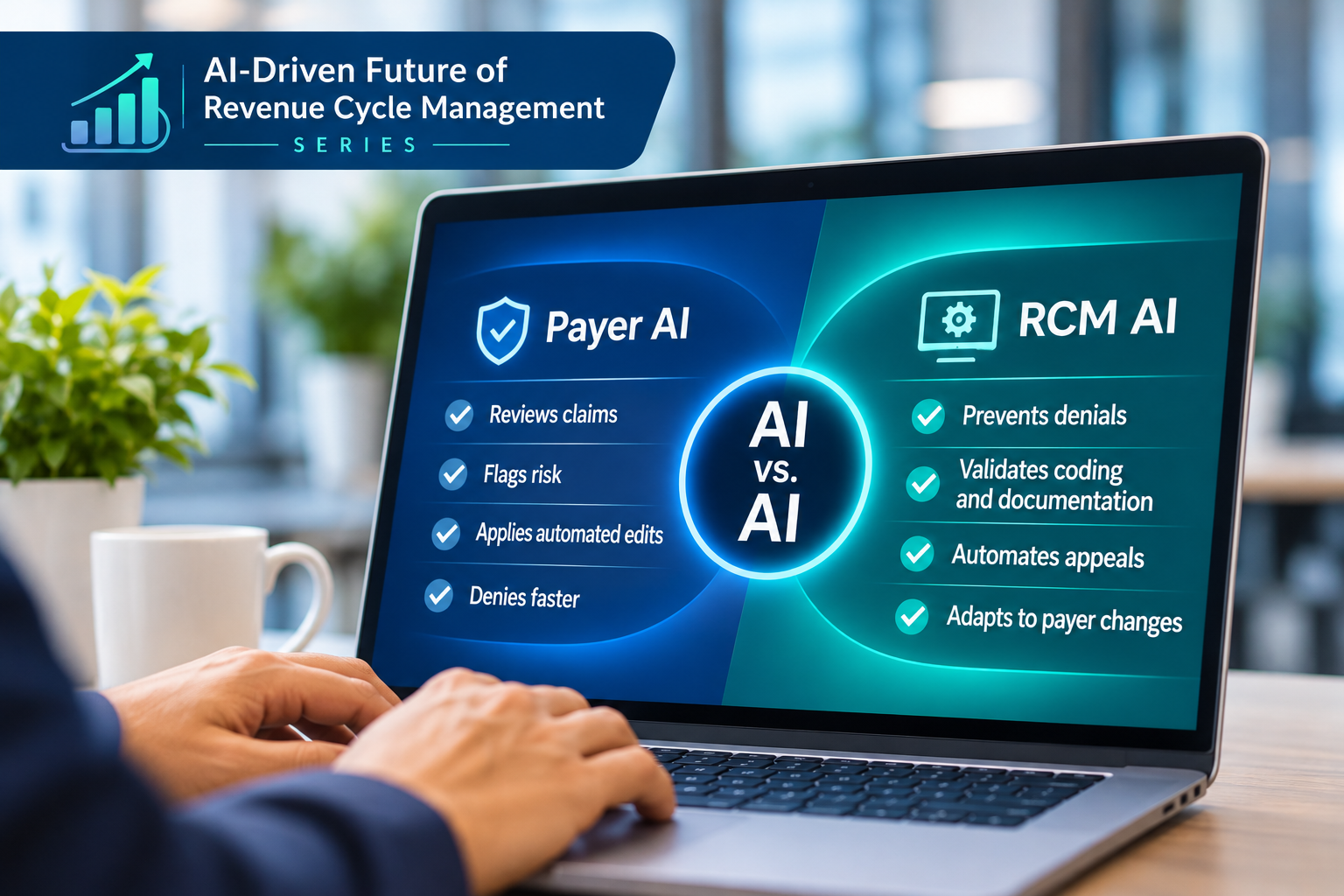
Payers are moving fast. Many now use artificial intelligence (AI) to review claims, flag risk, and automate denials, changing the rules for revenue cycle management (RCM) billing companies.
If billing teams do not adapt, denial rates could rise, rework may increase, and cash flow could slow. RCM companies can respond by using the same technology that powers payer decisions to strengthen their own operations.
The New Reality: AI vs. AI
Payer AI systems now:
- Scan claims before adjudication
- Predict coding errors or missing documentation
- Apply automated edits at scale
- Deny claims faster and more consistently
This creates a growing gap between automated payer review and manual billing workflows. RCM companies need their own AI capabilities to keep pace.
1. Use Predictive Analytics to Stop Denials Before Submission
The best denial is the one that never happens. AI models can analyze:
- Historical denial patterns
- Payer-specific rules
- Coding trends by provider or location
These insights allow teams to flag high-risk claims before submission and take corrective action before a denial occurs.
Key Impact:
- Fewer first-pass denials
- Faster reimbursement
- Lower rework costs
2. Automate Coding Validation and Documentation Checks
Payer AI often targets coding accuracy and documentation gaps. Healthcare RCM automation can help billing companies:
- Validate CPT and ICD codes in real time
- Check documentation completeness
- Suggest corrections before submission
These capabilities support a more consistent clean claim process at scale, with faster validation than manual audits alone.
Key Impact:
- Higher clean claim rates
- Reduced payer scrutiny
- Stronger compliance
3. Build Payer-Specific Intelligence Models
Payers have different requirements and reimbursement patterns. AI can segment payer behavior and identify:
- Unique denial patterns
- Policy changes
- Reimbursement trends
RCM companies can use these insights to tailor workflows by payer.
For example, they can:
- Adjust coding strategies for specific insurers
- Route high-risk claims for additional review
- Apply payer-specific edits automatically
Key Impact:
- Better alignment with payer expectations
- Fewer avoidable denials
- Smarter workflows
4. Use AI for Denial Root Cause Analysis
Many organizations track denials but struggle to identify the underlying causes. AI can analyze large volumes of denial data to reveal:
- Root causes across large datasets
- Hidden trends across locations or providers
- Systemic issues in workflows
This gives denial management in healthcare RCM a more strategic role. Teams can address recurring process problems that contribute to denials across multiple claims.
Key Impact:
- Continuous improvement
- Reduced repeat denials
- Better operational visibility
5. Automate Appeals With Intelligent Workflows
As payer AI accelerates denial decisions, billing teams need more efficient appeals processes. AI can:
- Generate appeal letters using claim data
- Match documentation to payer requirements
- Prioritize appeals based on success probability
These capabilities can reduce manual effort and improve appeal outcomes.
Key Impact:
- Faster appeal cycles
- Higher recovery rates
- Reduced administrative burden
6. Monitor Payer Behavior in Real Time
Payer rules change frequently, and AI can help billing teams detect those changes faster than manual review.
By analyzing claim outcomes in real time, AI can:
- Identify sudden spikes in denials
- Detect new edit rules
- Alert teams to emerging risks
This allows billing companies to respond more quickly when payer behavior changes.
Key Impact:
- Faster response to payer changes
- Reduced revenue disruption
- Proactive operations
7. Augment Staff, Do Not Replace Them
AI can strengthen the work of experienced billing professionals by taking on repetitive tasks and helping teams focus their expertise where it is most valuable.
The most effective RCM companies:
- Use AI to handle repetitive tasks
- Let staff focus on complex cases
- Combine automation with human judgment
This balance can improve both speed and accuracy.
Why This Matters Now
The gap between payer automation and provider workflows is growing. As payers expand their use of AI, billing companies that continue to rely heavily on manual processes face increasing operational pressure.
Without AI:
- Denials increase
- Costs rise
- Margins shrink
With AI:
- Workflows scale
- Decisions improve
- Revenue stabilizes
Build the Capabilities to Stay Ahead of Payer AI
RCM billing companies are entering an AI-driven environment. Payers already use advanced tools to control costs and manage risk, and billing teams must respond with equal sophistication.
The goal is straightforward:
- Prevent denials
- Reduce friction
- Protect revenue
AI makes that possible, but speed matters. The longer organizations wait to adopt these capabilities, the further they risk falling behind.
As AI complexity increases, many healthcare organizations must decide whether to build internal AI capabilities or partner with specialized RCM organizations.
This article is part of the “AI-Driven Future of Revenue Cycle Management” series exploring how artificial intelligence is transforming healthcare billing, reimbursement, and operational strategy.