
In modern healthcare, efficiency is paramount. The journey from a patient’s visit to a provider receiving payment is a complex, multi-step process known as the Revenue Cycle. At the heart of this cycle is the medical billing system, the powerful digital platform that connects the clinical record (what was done) with the financial transaction (how to get paid). The true value of a robust medical billing system lies in its ability to deeply and seamlessly integrate with the crucial workflows of coding and claims submission, transforming bottlenecks into a streamlined, high-speed revenue engine.
The Core Integration: Connecting the Clinical and Financial Worlds
A high-performing medical billing system acts as the central nervous system for the practice’s financial health. Its primary function is not just to generate invoices, but to orchestrate the entire flow of financial data, starting the moment a patient checks in. The integration between the system and the workflows focuses on three critical stages: Encounter Documentation (the clinical source), Coding and Charge Capture (the translation phase), and Claims Submission and Adjudication (the financial execution).
A truly integrated healthcare billing software ensures that data moves flawlessly and automatically across these three pillars, eliminating manual data entry and the costly human errors that follow.
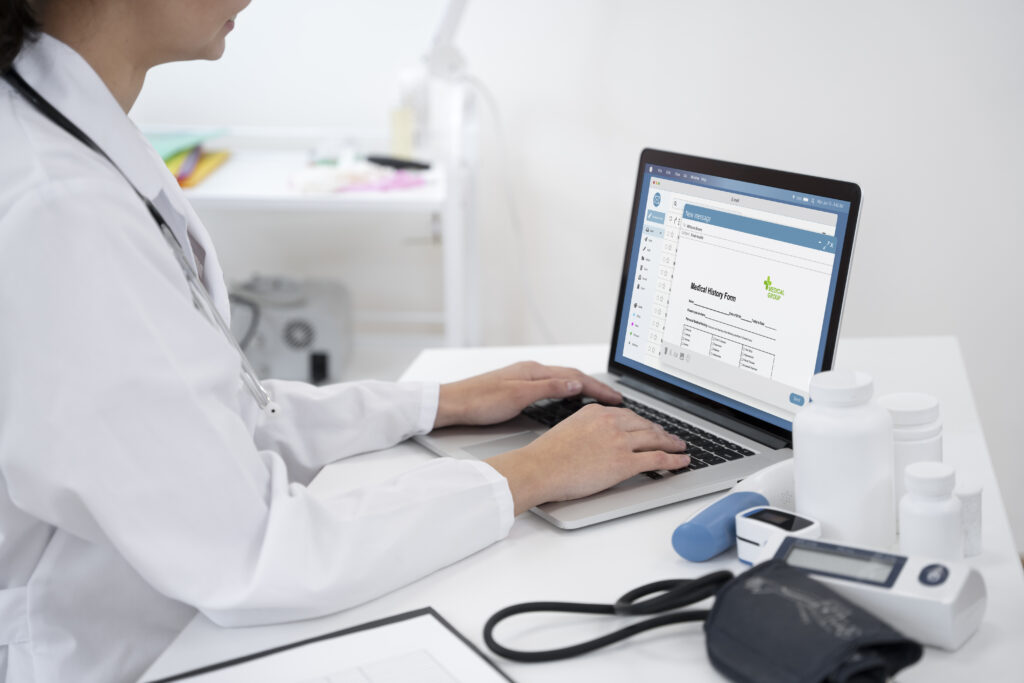
1. Seamless Integration with Clinical Documentation (EHR/EMR)
The foundation of accurate billing is accurate clinical documentation. A standalone billing system creates a massive chasm between the Electronic Health Record (EHR) and the financial office.
Modern medical billing software is built to integrate directly with the provider’s EHR/EMR. This integration eliminates the need for manual “superbills” or charge sheets and allows for automated charge capture. As the provider documents the patient encounter—clicking on a documented service, procedure, or diagnosis—the corresponding codes and charges are immediately transferred to the billing module.
The system often utilizes pre-defined templates that map frequently used procedures and diagnosis clusters to the appropriate Current Procedural Terminology (CPT) and International Classification of Diseases (ICD-10) codes. This automation prevents missed charges, which are common when relying on paper or manual review. Every service documented is captured and sent for billing, ensuring the practice is paid for all the work performed. This direct link means that the coding workflow doesn’t start with a paper pile; it starts with electronic, organized data that is ready for review and submission.
2. Streamlining the Coding Workflow with Scrubber Technology
Once the charges are automatically captured from the EHR, they enter the coding workflow within the medical billing system. This stage is where compliance and accuracy are verified before the claim is submitted. The most valuable feature here is the Claims Scrubber.
The Scrubber is an automated, rules-based engine within the healthcare billing software that validates every claim against thousands of payer-specific and regulatory rules. It functions as the digital gatekeeper by performing critical checks such as:
- Code Validation: Checks for outdated, invalid, or non-specific ICD-10 and CPT codes.
- Modifier Placement: Ensures necessary modifiers (e.g., laterality, assistant surgeon) are correctly applied to CPT codes.
- Linkage Checks: Verifies that the CPT procedure code is appropriately linked to a supporting ICD-10 diagnosis code, thereby proving medical necessity.
- Payer-Specific Rules: Catches errors unique to specific insurers before the claim leaves the office (e.g., required pre-authorization number missing).
By catching and flagging these errors before the claim is sent, the medical billing system significantly increases the First Pass Acceptance Rate (FPAR). Coders can then focus their expertise on reviewing only the flagged claims—the exceptions—rather than manually checking every single line item. This efficiency transforms coding from a lengthy data-entry task into a focused, highly productive audit function.
3. Expediting Claims Submission and Payer Communication
The final stage of the workflow—the claims process—is where the integration of the medical billing system directly impacts cash flow. The system utilizes Electronic Data Interchange (EDI) to send claims directly to payers (insurance companies) via a clearinghouse. This replaces the slow, error-prone process of mailing paper claims.
Claims are generated and submitted electronically in batches, often multiple times a day, drastically reducing the Days in Accounts Receivable (A/R). The system doesn’t just send the claim; it receives and integrates immediate electronic feedback. It receives acknowledgments confirming the payer received the claim and, crucially, retrieves Electronic Remittance Advices (ERAs), which detail payment, adjustments, or denials.
This deep integration means that as soon as a payer processes the claim, the information is automatically fed back into the medical billing system. There’s no waiting for paper Explanation of Benefits (EOBs) to arrive and be manually posted—the system automatically posts payments to the correct patient accounts. This level of automation ensures swift and accurate reconciliation.
4. The Denial Management Workflow
Even with a perfect system, some claims will inevitably be denied. This is where the integrated nature of the medical billing software saves significant time and money.
When an ERA is received detailing a denial, the system automatically routes the claim into a dedicated Denial Management Work queue. The system can often categorize denials by common reason codes (e.g., “Non-Covered Service,” “Missing Authorization”) and prioritize high-value or easy-to-correct denials.
Since the billing system is integrated with the coding details and patient record, the coder or biller can instantly access the original claim data, identify the error (often a simple modifier change or corrected diagnosis linkage), make the correction, and electronically resubmit the claim without having to re-key any information. This streamlined workflow prevents denied claims from sitting in limbo, ensuring they are addressed and re-sent within the crucial window required by payers, thereby protecting revenue that would otherwise be lost.
The Financial Advantage of Integrated Medical Billing Systems
A disparate system—one where coders use separate software from billers, and the billing office is disconnected from the EHR—is a recipe for high administrative costs and crippling denial rates.
By contrast, an integrated medical billing system provides providers with a powerful financial advantage. It ensures maximized accuracy through automated charge capture and scrubbing technology, leading to claims that are always correct and compliant. It enables accelerated cash flow as EDI submissions and automated payment posting significantly reduce the A/R cycle. Finally, it results in optimized staff productivity because billing and coding teams spend less time on manual data entry and more time on high-value tasks like complex denial resolution and documentation audits.
For any healthcare organization focused on both high-quality patient care and financial sustainability, investing in a unified, sophisticated healthcare billing software platform that deeply integrates with coding and claims workflows is the most critical operational decision they can make. This synergy is what defines modern, successful Revenue Cycle Management. To explore advanced, tech-driven RCM solutions tailored for healthcare agencies, consider partnering with Exdion Health.